How to Install a Tubular Skylight: Step-by-Step Overview

2 min read
Installing a tubular skylight means planning the spot, cutting the ceiling and roof openings, setting the flashing, fitting the dome and tube, and finishing with the diffuser. It involves roofs and attics, so follow the manual, work in dry, calm weather, and hire a professional if you are unsure.

Before you start
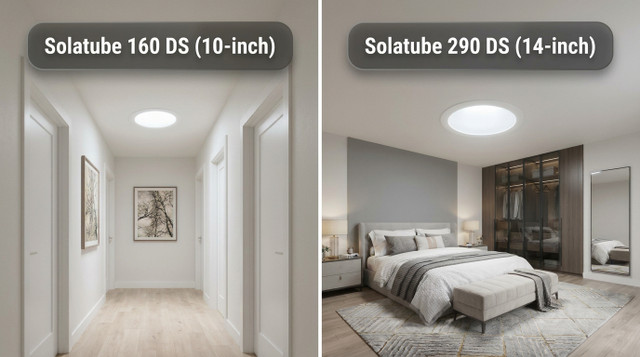
The manual covers both the 160 DS and the 290 DS. Plan these first:
- Pick the spot in daylight. Center the system over the area you want lit, not the room.
- Measure roof to ceiling. If it is longer than the 20 inches of tubing in the kit, add extension tubes.
- Avoid shade and obstructions. Think trees, chimneys, valleys, pipes, ducts, flues and fire sprinklers.
- Check permits. Most states and localities require permits for building projects [1]. Also confirm local code requirements.
- Gather tools. Saws, a hammer, a flat bar, a utility knife, a tape measure, a caulking gun, a screw gun and safety equipment.
The installation in seven steps
- Mark and cut. Mark the ceiling and roof spots between joists and rafters, then cut both openings.
- Set the flashing. Seal and fasten it. On a shingle roof, cover its top half with felt paper before replacing shingles.
- Attach the top tube to the flashing and tape the seams.
- Snap on the dome. In the Northern Hemisphere, the reflective side of the LightTracker® faces south.
- Assemble the tube run. Overlap seams by at least 1½ in (38 mm), screw each joint and tape every seam with foil tape.
- Fasten the tube to the ceiling with the clamps.
- Add the effect lens and diffuser. Align the tabs, push and twist to lock.
This is an overview. Follow the manual for your roof setup, and see our roof types guide for matching the flashing to your roof.
Safety first
Reflective tubes can focus sunlight and cause heat or fire. Keep the film on until the parts are installed, never leave tubing or scraps in the sun, and support your weight on attic framing, not drywall.
Falls are the leading cause of death among construction workers [2]. Stop work at height when winds reach 25 to 30 mph, and take extra care on sloped roofs [2].

Frequently asked questions
Do I need a permit?
Probably. Most states and localities require permits for building projects [1]. Ask your building department.
Can I install it myself?
The kits are DIY, but a professional is the safer choice. The Department of Energy says it is best to have a professional install a skylight, and that the skylight shaft must be insulated and air sealed in the attic [3].
What if my roof is not shingle?
Match the flashing to your roof covering, not only its pitch. If you are unsure, ask your installer before you order.
Want a pro to install it?
Find a Premier Dealer for a free consultation, or send us your roof details.
References
- Federal Trade Commission. “Hiring a Contractor.” Consumer information, March 2014. U.S. Government Publishing Office. Accessed October 30, 2026. https://www.govinfo.gov/content/pkg/GOVPUB-FT-PURL-gpo73201/pdf/GOVPUB-FT-PURL-gpo73201.pdf
- National Institute for Occupational Safety and Health (CDC). “Falls Campaign 2022: Making Research Work.” NIOSH Science Bulletin, April 13, 2022. Accessed October 30, 2026. https://www.cdc.gov/niosh/bulletin/2022/falls-campaign.html
- U.S. Department of Energy. “Skylights.” Energy Saver. Accessed October 30, 2026. https://www.energy.gov/energysaver/skylights