
Sale


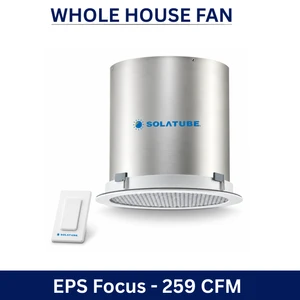
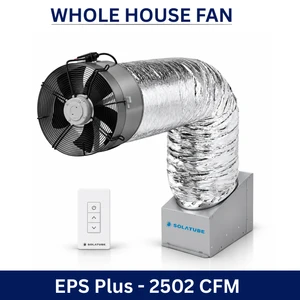
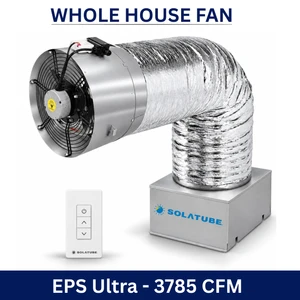

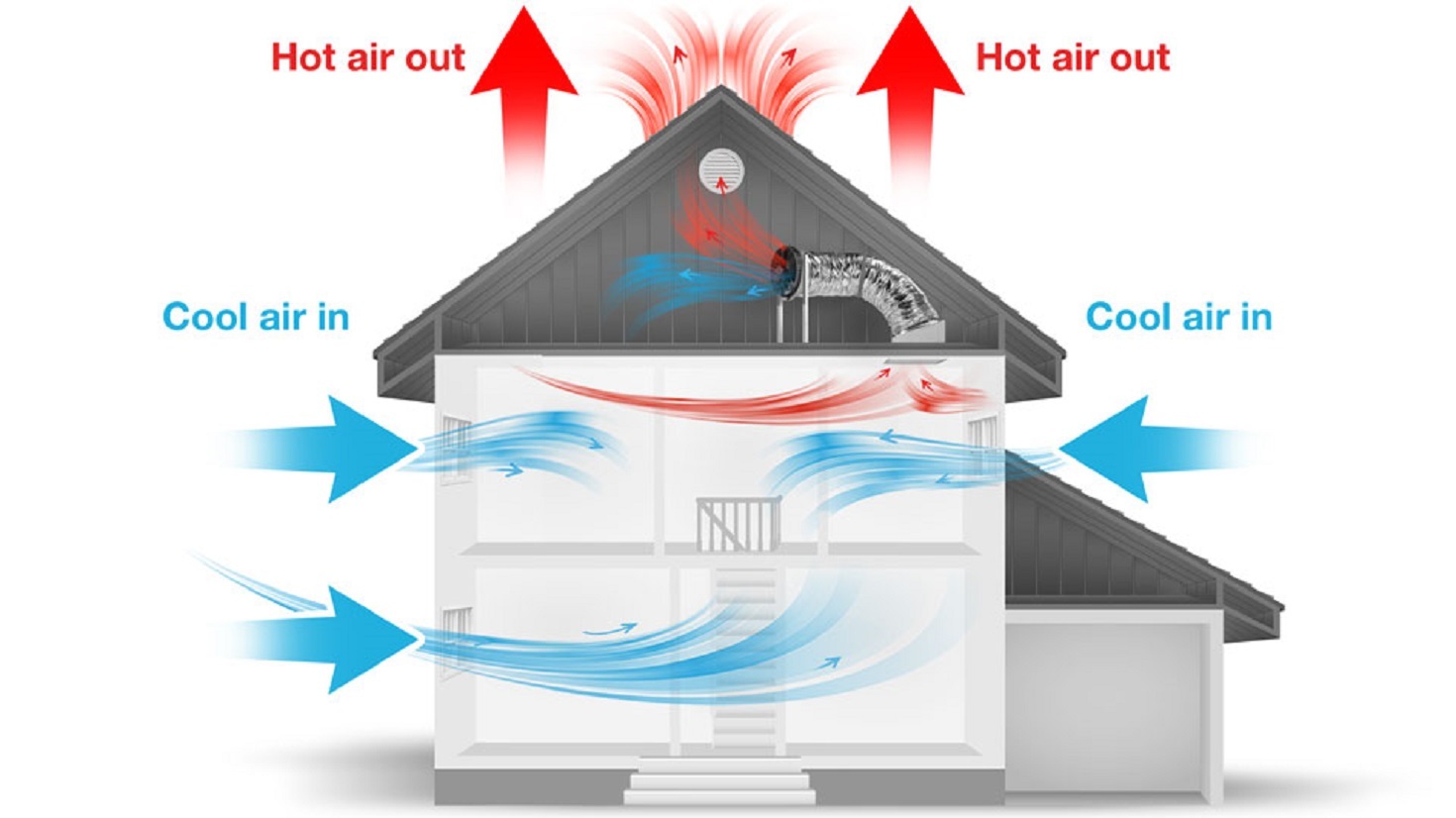
Open the windows. Let the cooler air in. A Solatube Whole House Fan draws outdoor air through your rooms and pushes warm indoor air out through the attic—creating a refreshing breeze through the places you live.
From the compact EPS Focus to the powerful EPS Extreme, the series brings together purposeful airflow, thoughtful sound control and easy everyday operation.
The ducted EPS models combine the patented HushMount 2 system with insulated ducting to help manage vibration and operating noise. Sound ratings are listed by model below.
Zone, Plus, Ultra and Extreme pair an EC brushless motor with seven variable speeds and a Comfort Control Remote. Soft Start brings the fan up to speed smoothly.
Jet Blade fan design supports strong airflow, while R6 damper doors provide insulation when closed. The ducted models finish with a clean intake grille without visible fasteners.
Focus serves smaller spaces with simple one-speed operation. Zone and Plus step up the airflow for smaller and mid-size homes; Ultra and Extreme serve larger spaces. Compare capacity, sound, power and attic ventilation together.
| Specification | Focus | Zone | Plus | Ultra | Extreme |
|---|---|---|---|---|---|
| Listed coverage | Up to 500 sq ft | 500–1,200 sq ft | 1,000–2,200 sq ft | 2,000–3,200 sq ft | 3,000+ sq ft |
| Maximum airflow | 259 CFM | 1,400 CFM | 2,502 CFM | 3,785 CFM | 4,567 CFM |
| HVI-rated airflow* | 242 CFM | 1,157 CFM | 2,288 CFM | 3,532 CFM | 4,267 CFM |
| Sound level, low/high | 30 dB | 40 / 48 dB | 44 / 58 dB | 50 / 58 dB | 58 / 64 dB |
| Motor power at 120V | 14 W | 70–185 W | 60–369 W | 69.3–383 W | 175–697 W |
| Fan diameter | 12 in. | 14 in. | 18 in. | 20 in. | 22 in. |
| Remote control | One speed | 7 speeds | 7 speeds | 7 speeds | 7 speeds |
| Damper insulation | R6 | R6 | R6 | R6 | R6 |
| Duct length / diameter | Not applicable | 7 ft / 14 in. | 7 ft / 18 in. | 7 ft / 20 in. | 7 ft / 20 in. |
| Intake grille size | 16.1 in. diameter | 15.5 × 21.5 in. | 15.5 × 21.5 in. | 15.5 × 28 in. | 15.5 × 28 in. |
| Required attic venting | 1 sq ft | 2 sq ft | 4 sq ft | 6 sq ft | 8 sq ft |
*HVI 916 airflow at 0.1 in. water-gauge pressure, at full speed. CFM means cubic feet per minute. Coverage ranges are a sizing guide; layout, ceiling height and available ventilation also matter. Follow the model’s installation instructions when calculating attic venting.
Even after the sun goes down, a home can hold onto the day’s warmth. Whole house ventilation exchanges that warm indoor air for cooler outdoor air during the evening, overnight or early morning.
Continued airflow can also help cool the surfaces and furnishings that stored heat during the day. This is often called thermal mass cooling: releasing stored warmth while cooler outdoor air is available.
Use the fan when outside temperatures are lower than inside. The opportunity to reduce air-conditioning use depends on your weather, home and cooling routine.
Window openings and attic exhaust ventilation are both part of the system. Follow the operating and installation requirements for your selected fan.
The ducted models’ EC brushless motor, Soft Start and remote control let you select the airflow you want without climbing into the attic.
Zone, Plus, Ultra and Extreme include seven-foot insulated ducting. All five models list R6 damper doors, with model-specific intake and mounting dimensions.
The ducted EPS models feature an intake grille with no visible fasteners. Its removable, dishwasher-safe design makes routine grille cleaning straightforward.
Solatube’s whole house fan warranty covers mechanical components and the fan motor for different periods, subject to the applicable warranty terms.
Maximum airflow and airflow measured against resistance are different figures. The HVI values shown here are measured at 0.1 in. water-gauge pressure at full speed, providing a consistent test condition for comparing models.
Two homes with the same floor area can have different ceiling heights and room arrangements. Where ranges overlap, compare airflow, sound and attic venting requirements rather than choosing by square footage alone.
Focus has a different configuration: a one-speed remote, a listed 14-watt motor and no duct length or diameter specified. It serves spaces up to 500 sq ft, while Zone, Plus, Ultra and Extreme use the larger ducted, variable-speed arrangement.
It provides cooling through outdoor-air ventilation when conditions are suitable. Air conditioning remains useful when outdoor air is too warm or conditions call for cooling and humidity control. The two can serve different parts of your cooling routine.
A whole house fan draws outdoor air through open windows and the living space. A solar attic fan ventilates the attic itself. Choose according to the space you want to ventilate.
The installation involves ceiling access, attic space, mounting and electrical requirements. Review the instructions for your model before starting, and use a qualified installer where needed. The required attic vent area is an important part of planning the installation.
Choosing between Zone and Plus? Sizing a larger home? Tell us your floor area, ceiling height and room layout. We’ll help you work through the details.
Tell us about your project or question and a Solatube specialist will get back to you.
A Solatube product specialist will contact you shortly.