Solatube 160 DS vs 290 DS: Which Size Do You Need?
2 min read
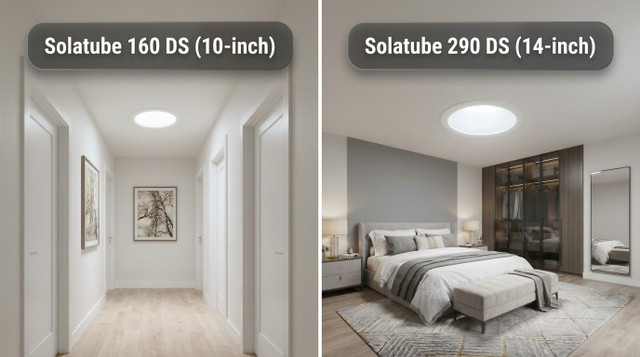
The Solatube 160 DS has a 10-inch tube and suits smaller spaces. The 290 DS has a 14-inch tube and suits larger spaces and higher ceilings. Both are DIY kits with the same parts. Choose by room size and ceiling height, then check the tube run and the opening each one needs.
The two kits side by side
| 160 DS | 290 DS | |
|---|---|---|
| Tube diameter | 10 in (250 mm) | 14 in (350 mm) |
| Room size | Smaller spaces | Larger spaces |
| Listed for | Bathrooms, laundry rooms, closets and hallways | Kitchens, family rooms, master bathrooms, garages and rooms with high ceilings |
| Round opening in roof and ceiling | About 10¾ in (275 mm) | About 14¾ in (375 mm) |
| Clearance from the cut to a joist | 5⅜ in (140 mm) | 7⅜ in (190 mm) |
| Ventilation add-on | Available | Not available |
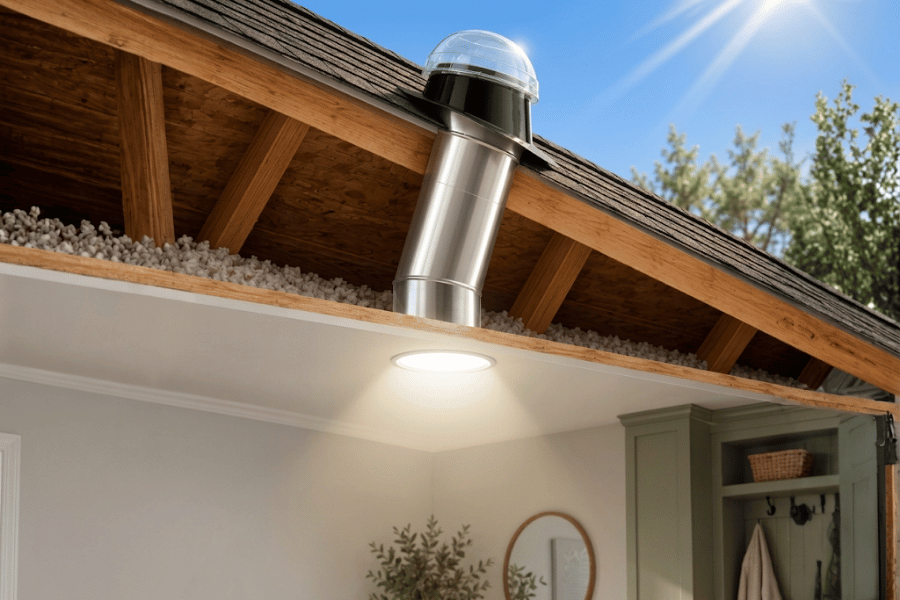
Everything else is the same. Each kit is a complete DIY kit with a rooftop dome with Raybender® 3000 technology, Spectralight® Infinity tubing, flashing for the roof setup you choose, a LightTracker® reflector, an effects lens, a ceiling fixture, fasteners, roof sealant and instructions. Each includes 20 inches of tubing, and extension tubes are not included. Solatube covers the components with a 10-year warranty.
What tube size changes
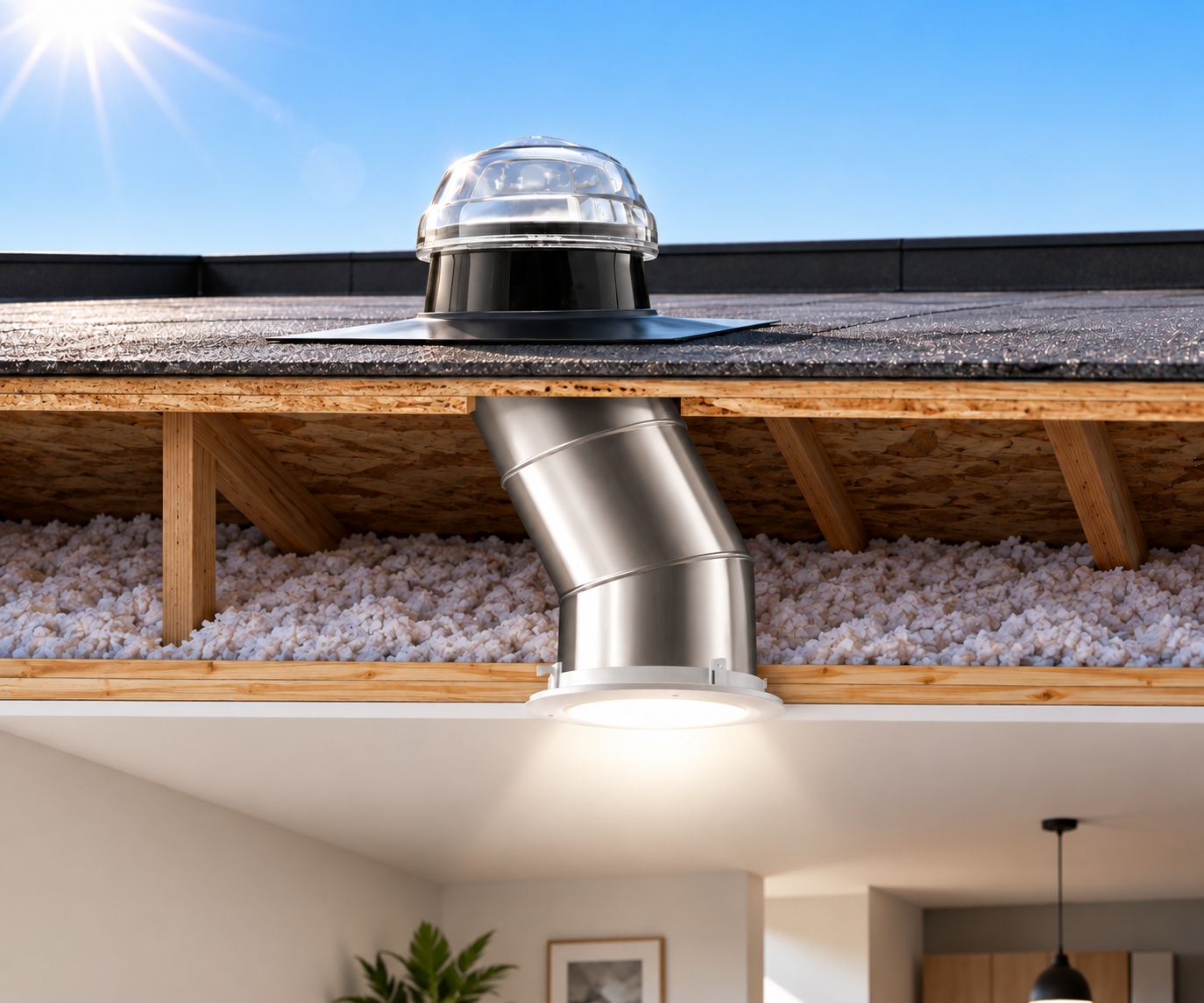
A wider tube carries more light. Berkeley Lab tested commercially available tubular daylight devices and found that on clear days light levels rose with tube diameter [1]. The other factor is length: an Australian Government guide notes that the longer the tube, the less light it transmits [2].
So size the tube to the room, and keep the run from roof to ceiling as direct and as short as you can. Our first-floor guide covers recommended tube lengths and extension tubes.
How to choose
- Start with the room. The Solatube 160 DS is Solatube’s pick for smaller spaces, and the Solatube 290 DS for larger spaces and high ceilings.
- Check the framing. The 290 DS needs a larger opening and more clearance between the cut and the nearest joist, so confirm the space in your ceiling and roof first.
- Planning a bathroom with a fan? The ventilation add-on works with the 160 DS only.
- Both take the same add-ons otherwise. That includes an electric light add-on, a Solar NightLight, extension tubes and a daylight dimmer.
- Compare the total cost, not just the kit. Extension tubes and installation change the price. See how much a Solatube costs.
Frequently asked questions
Is the 290 DS always the better choice?
No. A wider tube carries more light [1], but it also needs a bigger opening and more framing clearance. For a small room, the 160 DS is the right size.
How big is the opening each kit needs?
Solatube’s installation manual calls for a round hole of about 10¾ in (275 mm) for the 160 DS and about 14¾ in (375 mm) for the 290 DS, with at least 5⅜ in (140 mm) and 7⅜ in (190 mm) of clearance to a joist.
Do the kits include extension tubes?
No. Each kit includes 20 inches of tubing. Add extension tubes when the roof-to-ceiling distance is longer.
Not sure which size fits your room?
Send your room and roof details and a Solatube specialist will help you choose, or find a Premier Dealer near you.
References
- Fernandes LL, Regnier CM. “Lighting and visual comfort performance of commercially available tubular daylight devices.” Solar Energy 251:420–437, 2023 (Lawrence Berkeley National Laboratory). Accessed October 30, 2026. https://www.sciencedirect.com/science/article/abs/pii/S0038092X23000282
- Australian Government, Department of Climate Change, Energy, the Environment and Water. “Skylights and roof windows.” YourHome. Accessed October 30, 2026. https://www.yourhome.gov.au/passive-design/skylights