
Sale


Solatube Garage Ventilation
A garage can be a workshop, a training space, or the starting point for your next weekend project. Trapped heat and stale air can make it the last place you want to spend an afternoon.
Solatube garage exhaust fans help move that built-up heat out and draw replacement air in. Choose a powered fan for ventilation on demand, or explore solar ventilation for a compatible garage layout. The right setup starts with your ceiling, available attic space, and a clear path for air to enter and leave.
Find your fit
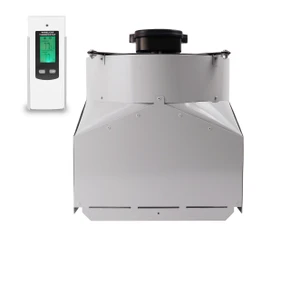
A direct ceiling-mount option for smaller garages with suitable attic access. Eliminating the duct run simplifies the equipment layout, while the ceiling grille keeps the installation tidy.
Listed for garages up to 500 sq. ft., with 120V power and a wireless remote offering variable speed and timer functions.
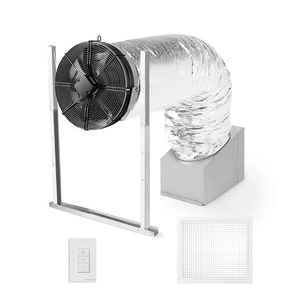
A ducted option for garages up to 600 sq. ft. where attic space accommodates the fan and duct assembly. The kit includes ducting and a Comfort Control remote.
Its 14-inch fan delivers a listed maximum airflow of 1,400 CFM.
For garages and workshops up to 800 sq. ft., the larger ducted model adds airflow capacity for a bigger space.
An 18-inch fan provides a listed maximum of 2,502 CFM, with seven variable speeds to adjust ventilation as conditions change.
Published coverage areas are starting points for selection. Ceiling height, garage layout, intake openings and available exhaust ventilation also affect sizing.
The details that matter
| Specification | Standard Garage Fan | Large Garage Fan |
|---|---|---|
| Garage coverage guidance | Up to 600 sq. ft. | Up to 800 sq. ft. |
| Maximum airflow | 1,400 CFM | 2,502 CFM |
| Listed HVI 916 airflow at 0.1 in. w.g. | 1,157 CFM | 2,288 CFM |
| Motor power at 120V | 70–185 watts | 60–369 watts |
| Fan / duct diameter | 14 in. / 14 in. | 18 in. / 18 in. |
| Duct length | 7 ft. | 7 ft. |
| Listed sound level, low / high | 40 / 48 dB | 44 / 58 dB |
| Intake grille dimensions | 15.5 × 21.5 in. | 15.5 × 21.5 in. |
| Listed attic venting requirement | 2 sq. ft. | 4 sq. ft. |
| Control | Comfort Control remote; seven speeds | Comfort Control remote; seven speeds |
CFM means cubic feet of air moved per minute. Maximum airflow and airflow measured against resistance are different ratings. Grille dimensions are not ceiling cutout dimensions; confirm opening sizes and clearances in the installation instructions.
Plan the airflow
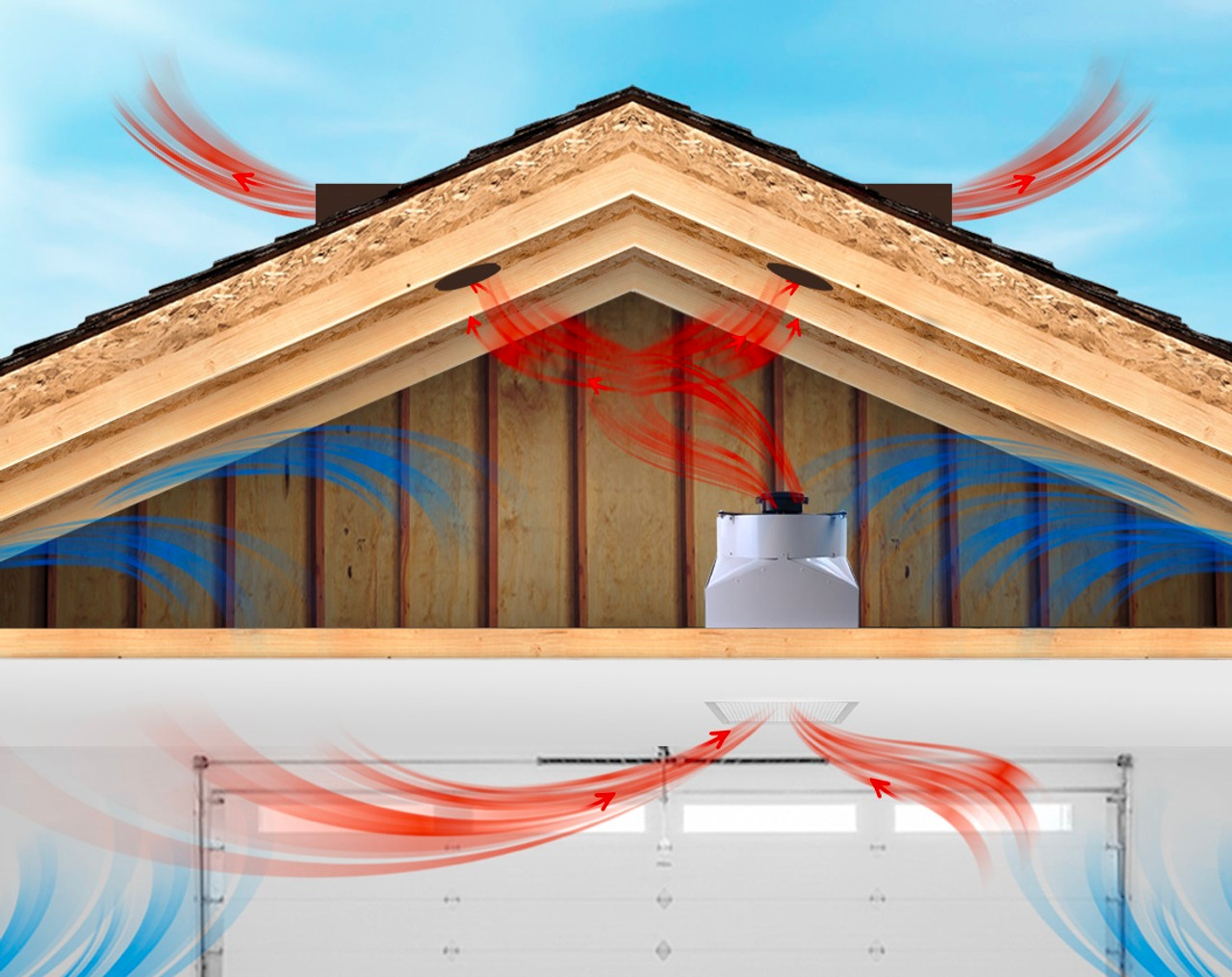
An exhaust fan works as part of a complete ventilation path. Replacement air enters through suitable exterior intake openings, moves through the garage, and leaves through the planned exhaust route.
Positioning matters. Intake and exhaust locations should encourage air to travel through the space you use, including the workbench or exercise area, rather than taking a short path between nearby openings.
When outdoor air is cooler than the air inside, that exchange helps carry accumulated heat away. Ventilation performance depends on outdoor conditions; a fan does not refrigerate the incoming air.
Considering solar?
The Solatube Solar-Powered Attic Fan with Interior Mount offers a 16W solar option. It is worth considering when your garage configuration provides a suitable interior mounting location, exhaust opening and solar-panel placement.
A finished garage ceiling and an open-rafter garage have different ventilation paths. Confirm which space the fan will ventilate and how air reaches the exterior before choosing a solar installation. Standard solar operation depends on available sunlight; temperature control is an accessory choice.
Explore the Interior Mount Solar Fan →Garage fan questions
The ductless model mounts directly at the ceiling without a connecting duct run. The Standard and Large kits include ducting, allowing the fan assembly to sit away from the ceiling grille. Available attic space and the required installation clearances help determine the best fit.
Fan capacity must work with the intake and exhaust openings. A larger fan cannot compensate for an inadequate air path. Match capacity to the garage volume and ventilation layout, especially if you have high ceilings or separate storage areas.
A closed-door setup needs properly sized replacement-air openings, such as suitable exterior louvers. A tightly closed garage without an adequate intake path limits airflow. Have the intake arrangement checked as part of the installation.
Air exchange can help remove moisture when the incoming air is drier. Results depend on outdoor humidity and the source of the moisture. Persistent dampness also calls for checking leaks, drainage and other water sources.
Confirm joist spacing, the required opening and the clearance above the ceiling. Attached garages also require attention to the separation between the garage and the home. Have your installer verify the appropriate fan and damper assembly for that location.
Tell us your garage dimensions, whether the ceiling is finished, and what is above it. We can help you narrow down the fan and installation approach that fit your space.
Tell us about your project or question and a Solatube specialist will get back to you.
A Solatube product specialist will contact you shortly.