Common Misconceptions About Daylighting and Solatube
1 min read
Five myths about tubular skylights, with the facts: they need a small roof opening, not a big one; they can limit heat but not remove it; they work on cloudy days with less light; roof installation carries real risk; and there are two sizes to choose from.
Five common myths
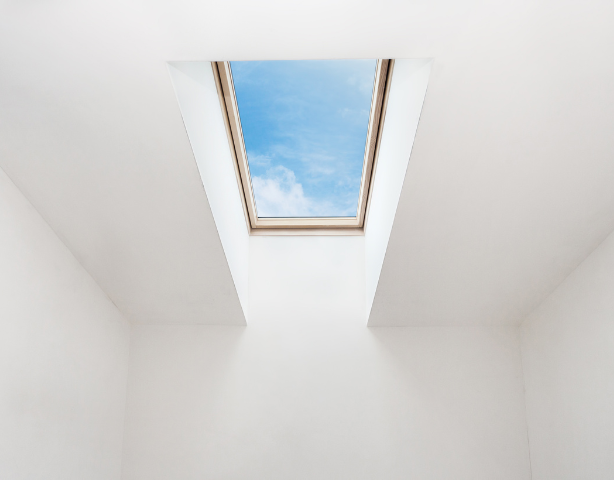
- Myth: it needs a big hole in the roof. Fact: tubular skylights are smaller than most skylights [1], and need a much smaller roof opening than a conventional skylight [2]. You still need a clear path from the roof to the ceiling.
- Myth: skylights always make a room too hot. Fact: skylights can add heat in summer, but a tubular skylight’s small collector minimizes heat gain and loss [1]. No skylight removes heat entirely, and roof direction and shading still matter [3].
- Myth: it only works on sunny days. Fact: it works on cloudy days, but admits considerably less daylight than a large conventional skylight, and works best where sunny days are common [3]. See our cloudy days guide.
- Myth: installation is quick and easy for anyone. Fact: Solatube kits are DIY kits, but roofs and attics are hazardous. Falls are the leading cause of death among construction workers, most often from roofs, ladders and scaffolds [4], and it is best to have a professional install a skylight [1]. See our install overview.
- Myth: one size fits every room. Fact: Solatube offers two sizes, the 160 DS and the 290 DS, plus accessories such as a daylight dimmer. See our 160 DS vs 290 DS guide.
Frequently asked questions
Does a tubular skylight give a view or fresh air?
No. Tubular skylight designs do not provide views or ventilation [1].
Will it cut my energy use?
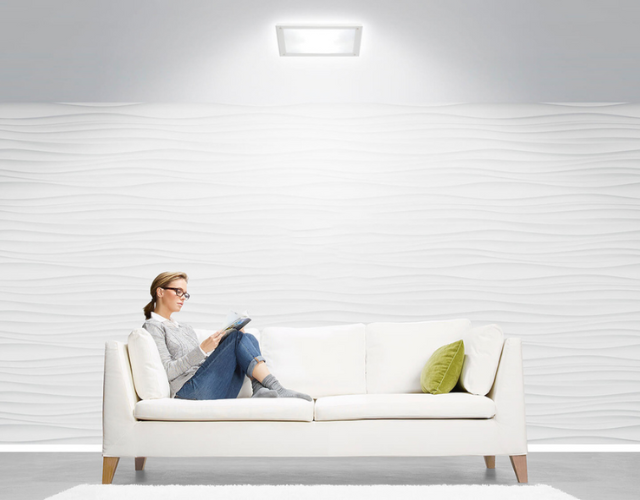
It can reduce the need for electric light during the day, but results vary by home, so we do not promise a saving.
Where does it fit best?
In rooms with little or no window light. Skylights are especially useful in rooms without windows [3].
Have a question about daylighting?
Send your room and roof details and a Solatube specialist will help, or find a Premier Dealer near you.
References
- U.S. Department of Energy. “Skylights.” Energy Saver. Accessed October 30, 2026. https://www.energy.gov/energysaver/skylights
- Fernandes LL, Regnier CM. “Lighting and visual comfort performance of commercially available tubular daylight devices.” Solar Energy 251:420–437, 2023 (Lawrence Berkeley National Laboratory). Accessed October 30, 2026. https://www.sciencedirect.com/science/article/abs/pii/S0038092X23000282
- Australian Government, Department of Climate Change, Energy, the Environment and Water. “Skylights and roof windows.” YourHome. Accessed October 30, 2026. https://www.yourhome.gov.au/passive-design/skylights
- National Institute for Occupational Safety and Health (CDC). “Falls Campaign 2022: Making Research Work.” NIOSH Science Bulletin, April 13, 2022. Accessed October 30, 2026. https://www.cdc.gov/niosh/bulletin/2022/falls-campaign.html